 EN

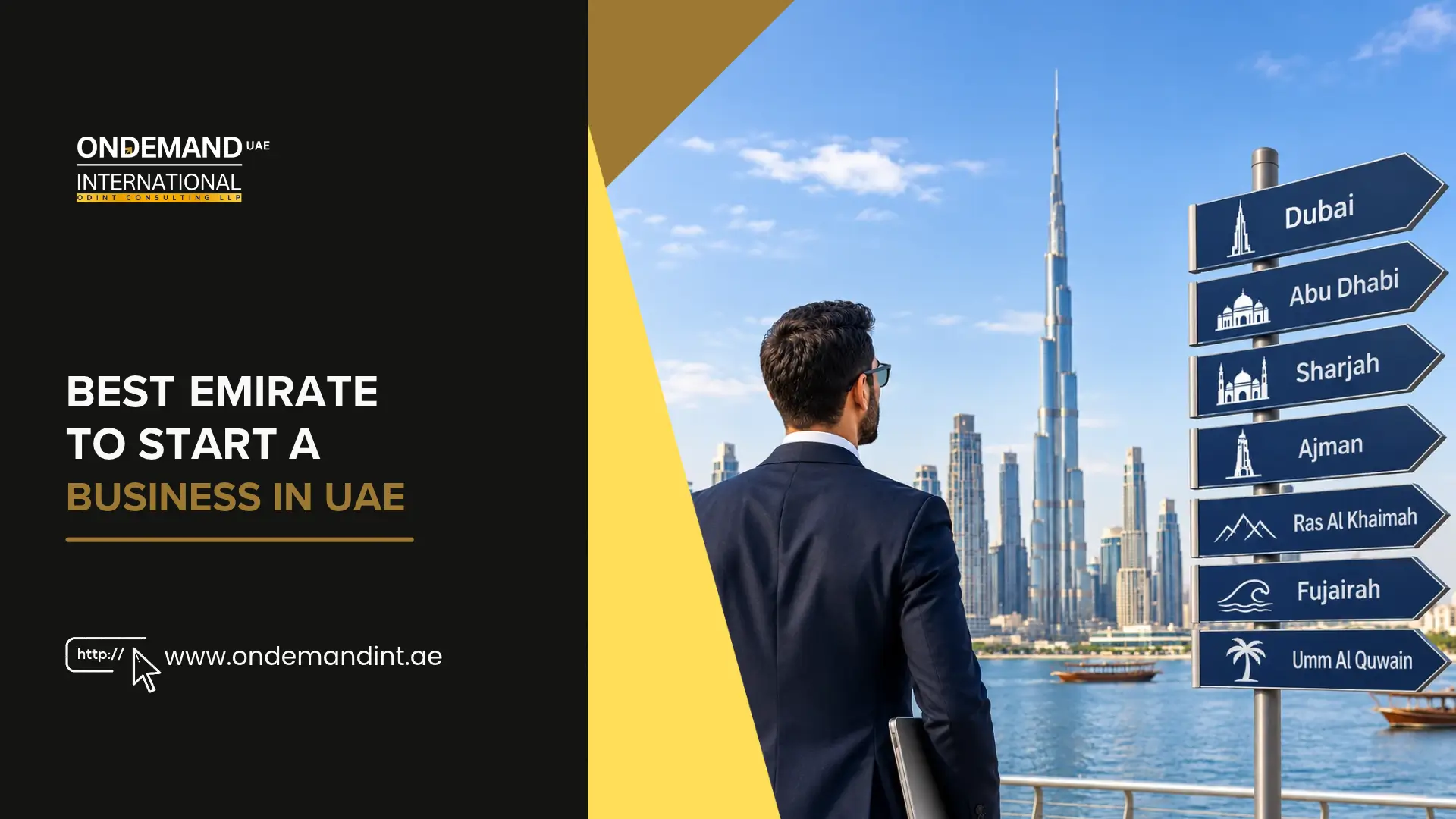
The United Arab Emirates (UAE) has become a significant destination for businesses, entrepreneurs, and foreign investors. Its seven emirates provide various business climates, infrastructure, investment prospects, and company formation facilities. However, choosing a suitable location requires more than comparing business setup costs. Entrepreneurs, also, must take into mind their industry, target customers, licensing requirements, and operational plans.
The best emirate to start a business in UAE varies according to the type of business and the market it plans to target. Dubai provides access to international trade and financial networks, whereas Abu Dhabi provides opportunities in advanced industries, technology, and investment. Other emirates such as Sharjah, Ajman, and Ras Al Khaimah also offer business environments to match various business needs.
How Does Emirate Selection Shape Your Business Opportunities?
The choice of emirate may impact the costs associated with setting up your company, market access, licensing, and long-term growth. The commercial benefits of each emirate also vary, so it is crucial to consider location when choosing the best UAE business location.
The following are some of the major factors influencing business opportunities:
- Industry Opportunities: Dubai is a hub for international trade and technology, and Abu Dhabi is a hub for energy, finance, and advanced manufacturing.
- Business Setup Costs: These are dependent on the emirate and jurisdiction and include licensing fees, office rentals, and operational costs.
- Market Access: Location influences the reach to local markets, overseas markets, ports, and distribution systems.
- Infrastructure: Airports, seaports, industrial zones, and transport facilities affect business activities.
- Licensing Requirements: Business activities, additional approvals, and regulatory conditions may vary from one jurisdiction to another.
- Expansion Potential: The right location should accommodate future expansion, new hires, additional facilities, and expansion of business.
Therefore, conducting a UAE business location comparison helps investors identify a suitable emirate based on their business activity, budget, and target market.
What Is the Best Emirate to Start a Business in UAE?
Identifying the best emirate to start a business in UAE requires comparing the commercial opportunities, infrastructure, industry strengths, and company formation options available across all seven emirates. Each location has different advantages, and the right choice depends on the nature of your business, target market, operational needs, and long-term goals.
1. Dubai
Dubai’s established international business destination offers opportunities in the fields of trading, technology, finance, tourism, and professional services. It is also connected internationally and has a well-established commercial base that is applicable to businesses with international and regional markets.
Key Business Advantages:
- International Trade: Connectivity to international markets via Jebel Ali Port, Al Maktoum International Airport & Dubai International Airport.
- Key industries: Trading, financial services, real estate, tourism, technology, healthcare, and professional consulting.
- Business Infrastructure: Built commercial areas, logistics infrastructure, transport infrastructure, and modern office buildings.
- Specialised Free Zones: Dubai International Financial Centre (DIFC) Financial Services, Dubai Multi Commodities Centre (DMCC) Commodities & International Trade, and Dubai Internet City (DiC) Technology Businesses.
- Market Access: A mature commercial environment that is linked to regional and international customers.
Suitable Business Types: International trading, financial services, IT companies, e-commerce, consulting, tourism, and professional services.
2. Abu Dhabi
The economy of Abu Dhabi is diversified with energy, advanced manufacturing, financial services, technology, and infrastructure development. It is also the capital of the UAE, providing opportunities for businesses engaged in government-related projects and large-scale investments.
Key Business Advantages:
- Industrial Development: Chemical, pharmaceutical, food processing, machinery, and advanced manufacturing opportunities.
- Key Industries: Energy, renewable energy, healthcare, financial services, technology, and industrial production.
- Business Infrastructure: Industrial facilities, research centres, logistics networks, and business environments with a focus on investment.
- Specialised Business Zones: Khalifa Economic Zones Abu Dhabi (KEZAD) for industrial and logistics activities and Abu Dhabi Global Market (ADGM) for financial and professional services.
- Investment Opportunities: A well-established business ecosystem for infrastructure, innovation, and large commercial investment projects.
Suitable Business Types: Manufacturing, energy, financial services, technology, healthcare, industrial supply, and investment-related business.
3. Sharjah
Sharjah already has a strong industrial, educational, and trading base. It is located between Dubai and the northern emirates, thus connecting diverse commercial markets relevant to manufacturing, distribution, and knowledge-based activities.
Key Business Advantages:
- Industrial Opportunities: Industrial clusters providing manufacturing, processing, engineering, and production opportunities.
- Major Industries: Manufacturing, education, publishing, trading, logistics, healthcare, and creative industries.
- Business Infrastructure: Industrial facilities, warehouses, airport connectivity, and commercial transportation networks.
- Specialised Free Zones: Hamriyah Free Zone for industrial and commercial activities and Sharjah Airport International Free Zone (SAIF Zone) for trading, warehousing and distribution.
- Education and Research: A recognised academic environment supported by universities, research institutions and educational facilities.
Suitable Business Types: Manufacturing, general trading, publishing, education services, logistics, engineering and distribution companies.
4. Ajman
Ajman provides business prospects for SME, trading companies, manufacturing, and service providers. Close to Dubai and Sharjah, offering access to neighbouring commercial markets and transportation networks.
Key Business Advantages:
- SME Business Environment: Options for entrepreneurs setting up their small businesses and expanding their commercial operations.
- Major Industries: Textiles, food processing, general trading, automotive services, marine activities, and manufacturing.
- Business Infrastructure: Commercial areas, industrial facilities, warehouses, and access to Ajman Port.
- Free Zone Facilities: Ajman Free Zone provides licensing options and office, warehouse, and other business facilities.
- Regional Connectivity: Road connections to Dubai, Sharjah, and other northern emirates.
Suitable Business Types: Startups, trading companies, textile businesses, e-commerce, service providers, food-related businesses, and small manufacturing operations.
5. Ras Al Khaimah
Ras Al Khaimah has a diversified economy that includes manufacturing, construction materials, tourism, hospitality, and international trade. Its industrial facilities and port connectivity are relevant to companies that need production facilities, supply, and distribution networks.
Key Business Advantages:
- Industrial Infrastructure: Access to industrial land, warehouses, and facilities for manufacturing and production.
- Major Industries: Construction materials, ceramics, manufacturing, tourism, hospitality, trading and industrial supply.
- Business Facilities: Offices, warehouses and industrial facilities available through relevant business zones.
- Specialised Free Zone: Ras Al Khaimah Economic Zone (RAKEZ) offers company formation options for startups, SMEs, freelancers and industrial businesses.
- Tourism Opportunities: Commercial opportunities connected to hotels, hospitality, leisure, and tourism developments.
Suitable Business Types: Manufacturing, construction materials, industrial supply, trading, tourism, hospitality and warehousing businesses.
6. Fujairah
Fujairah is strategically located on the UAE’s eastern coast, connecting to the Gulf of Oman and the Indian Ocean. It is maritime and relevant to businesses that deal in shipping, logistics, international trade, and industrial activities.
Key Business Advantages:
- Maritime Connectivity: Access to Fujairah Port and regional shipping routes.
- Major Industries: Shipping, maritime services, logistics, trading, manufacturing, mining, and industrial activities.
- Business Infrastructure: Port facilities, storage areas, warehouses, and transportation connections.
- Free Zone Facilities: Fujairah Free Zone provides business facilities and licensing options for different commercial and industrial activities.
- Trade Opportunities: Its eastern coastal location supports businesses involved in international goods movement and maritime-related operations.
Suitable Business Types: Shipping, marine services, import-export, logistics, warehousing, manufacturing, and industrial trading.
7. Umm Al Quwain
Umm Al Quwain provides business opportunities for trading, warehousing, distribution, and selected industrial activities. The port infrastructure is also crucial for some maritime activities and logistics in the UAE, and its location in the northern emirates offers road connections to other UAE commercial centres.
Key Business Advantages:
- Logistics and Distribution: Access to Ahmed Bin Rashid Port and regional road networks.
- Major Industries: Trading, warehousing, distribution, manufacturing, marine services, and selected industrial activities.
- Business Facilities: Commercial premises, storage facilities, and business setup options through relevant authorities.
- Free Zone Options: Umm Al Quwain Free Trade Zone (UAQ FTZ) offers company formation facilities for different business activities.
- Regional Connectivity: Road access to Dubai, Sharjah, and other northern emirates.
Suitable Business Types: Small trading companies, import-export businesses, warehousing, distribution, marine services, and selected manufacturing operations.
Which UAE Emirate Is Best for Different Business Activities?
The Best Emirate to Start a Business in UAE also depends on the type of company and its operational needs. Trading businesses may want to focus on transport and distribution networks, whereas manufacturing businesses require industrial infrastructure. Technology, consulting, and professional service companies are more likely to prioritise specialised business ecosystems, availability of talent, and access to customers.
The following comparison will be a starting point for comparing different locations:
| Business Activity | Emirates to Consider | Main Considerations |
|---|---|---|
| Trading and Import-Export | Dubai, Sharjah, Fujairah | Ports, airports, customs and distribution networks |
| IT and Technology | Dubai, Abu Dhabi, Sharjah | Technology ecosystems, talent and innovation facilities |
| Manufacturing | Abu Dhabi, Sharjah, Ras Al Khaimah, Ajman | Industrial land, utilities and warehouse facilities |
| Logistics and Transportation | Dubai, Fujairah, Sharjah, Umm Al Quwain | Port access, road connectivity and storage |
| Consulting and Professional Services | Dubai, Abu Dhabi, Sharjah | Customer access, professional networks and licensing |
| E-commerce and Startups | Dubai, Ajman, Ras Al Khaimah, Sharjah | Digital infrastructure, licensing and operating requirements |
These are only guiding recommendations, not specific rules. For example, a manufacturing corporation can choose an industrial area in Abu Dhabi or Sharjah, whereas an enterprise engaged in international distribution can choose Dubai or Fujairah. The final decision depends on the activity, available facilities, and target market.
What Mistakes Should You Avoid Before Selecting a UAE Emirate?
Entrepreneurs should not choose an emirate based solely on advertised company formation packages or initial licence prices. A suitable business location must also meet licensing, infrastructure, customer access, and operational requirements. Overlooking these factors can create extra costs, regulatory issues, or restrictions on business activities after registration.
- Choosing Based Only on Setup Costs: A lower setup cost does not necessarily reflect lower operating costs. Consider other operational expenses such as office rent, warehouse needs, employee visas, renewals, etc.
- Ignoring Business Activity Requirements: Not every licence covers every commercial activity. Other industries and areas may need extra clearance from relevant government agencies. Knowing the permitted activity and licensing conditions prior to registration will help avoid unnecessary delays.
- Overlooking Target Customers: The location should be suitable for the company’s target customers. Businesses that aim at local customers in the UAE may have different jurisdiction and market access needs than businesses that cater to overseas clients.
- Not Comparing Mainland and Free Zone Options: Mainland and free zone companies are run differently under different regulatory and commercial structures. There are certain permitted activities, market-access conditions, and requirements investors must be aware of about the jurisdiction before they make a decision.
- Ignoring Future Expansion Plans: A business may start with a small office and then be required to hire more people, expand the warehouse space, or move to a larger office. Selecting a location without considering future requirements can make expansion more complicated.
Conclusion
The selection of the best emirate to start a business in UAE depends on the nature of the business activity, target market, budget, and long-term goals. Dubai and Abu Dhabi have commercial and investment environments in place, whereas Sharjah, Ajman, Ras Al Khaimah, Fujairah and Umm Al Quwain offer investment opportunities in manufacturing, trading, logistics and other industries. Each emirate offers various benefits, and it is important to analyse your operational and licensing needs before you decide.
At OnDemand International UAE, we assist entrepreneurs and foreign investors in choosing the best UAE business location and guide them through the company formation process. If you are thinking about forming a Mainland or Free Zone company, we can help you choose the most suitable jurisdiction, explain the licensing process, and help you with business planning. Contact OnDemand International UAE to discuss your requirements and take the next step towards establishing your business in the UAE.
FAQs
Which emirate is the most suitable for starting a business in the UAE?
Dubai is suitable for international trade and professional services, while Abu Dhabi is ideal for investment and advanced industries. The best choice depends on your business activity.
Is Dubai or Abu Dhabi better for business setup?
Dubai is well suited to international trade, technology and tourism, while Abu Dhabi offers opportunities in energy, manufacturing and financial services.
Which UAE emirate offers affordable business setup options?
Ajman, Ras Al Khaimah and Umm Al Quwain offer options worth comparing for affordable business setup in the UAE. Costs depend on licence type, visas, and office requirements.